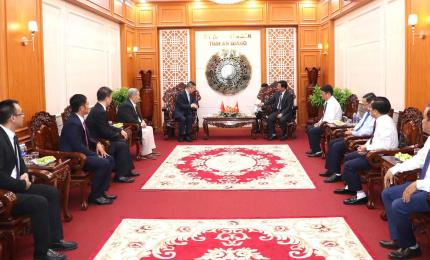
(AG Provincial E-Portal) - On the afternoon of 12/10, in Tinh Bien Ward, the An Giang Provincial People’s Committee, in coordination with the Ministry of Industry and Trade, held a conference reviewing five years of the Program on Development of Vietnam’s Border Trade Infrastructure through 2025, with a vision to 2030. The event was part of the Vietnam–Cambodia Border Trade Connectivity Forum in An Giang.
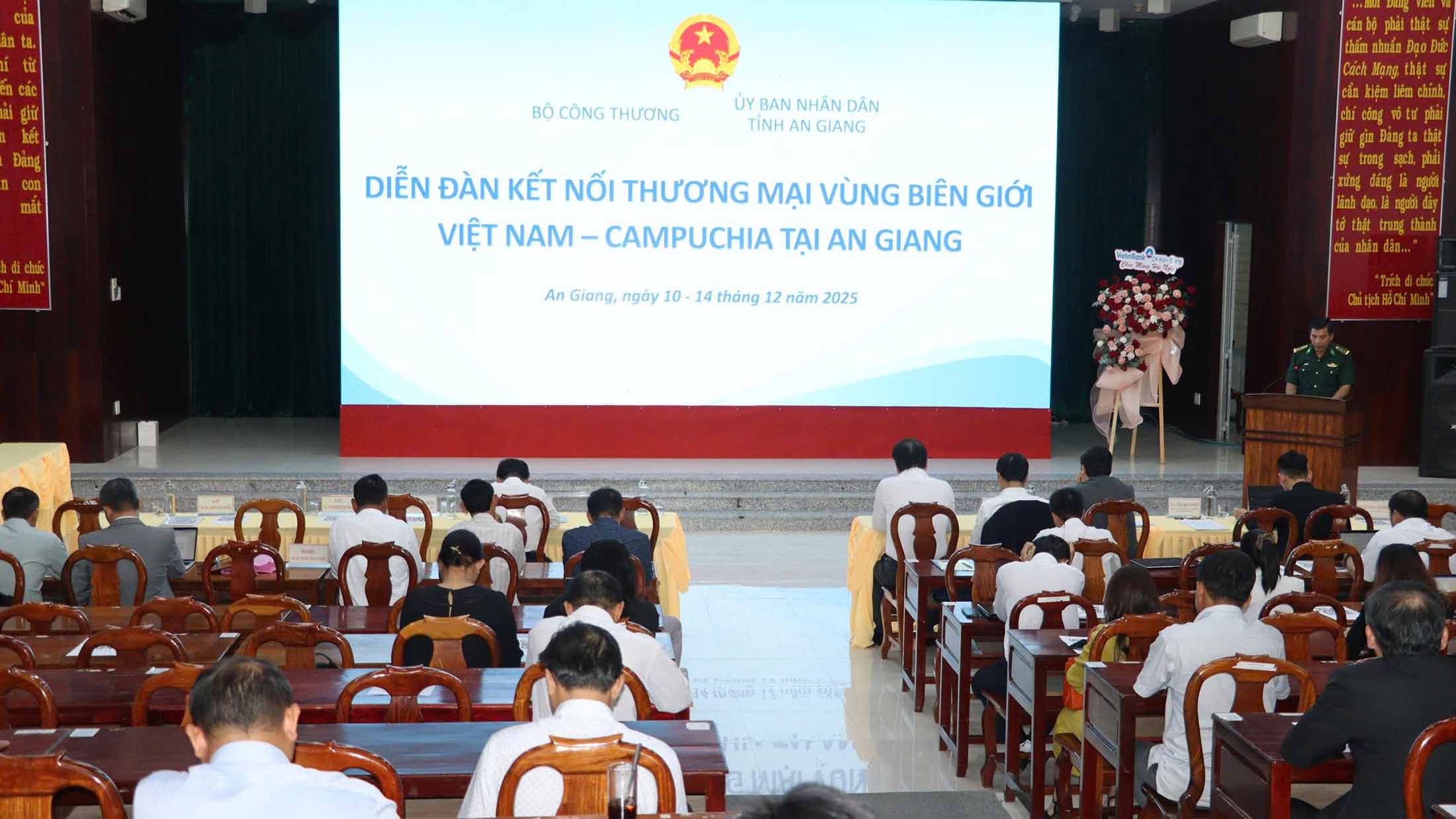
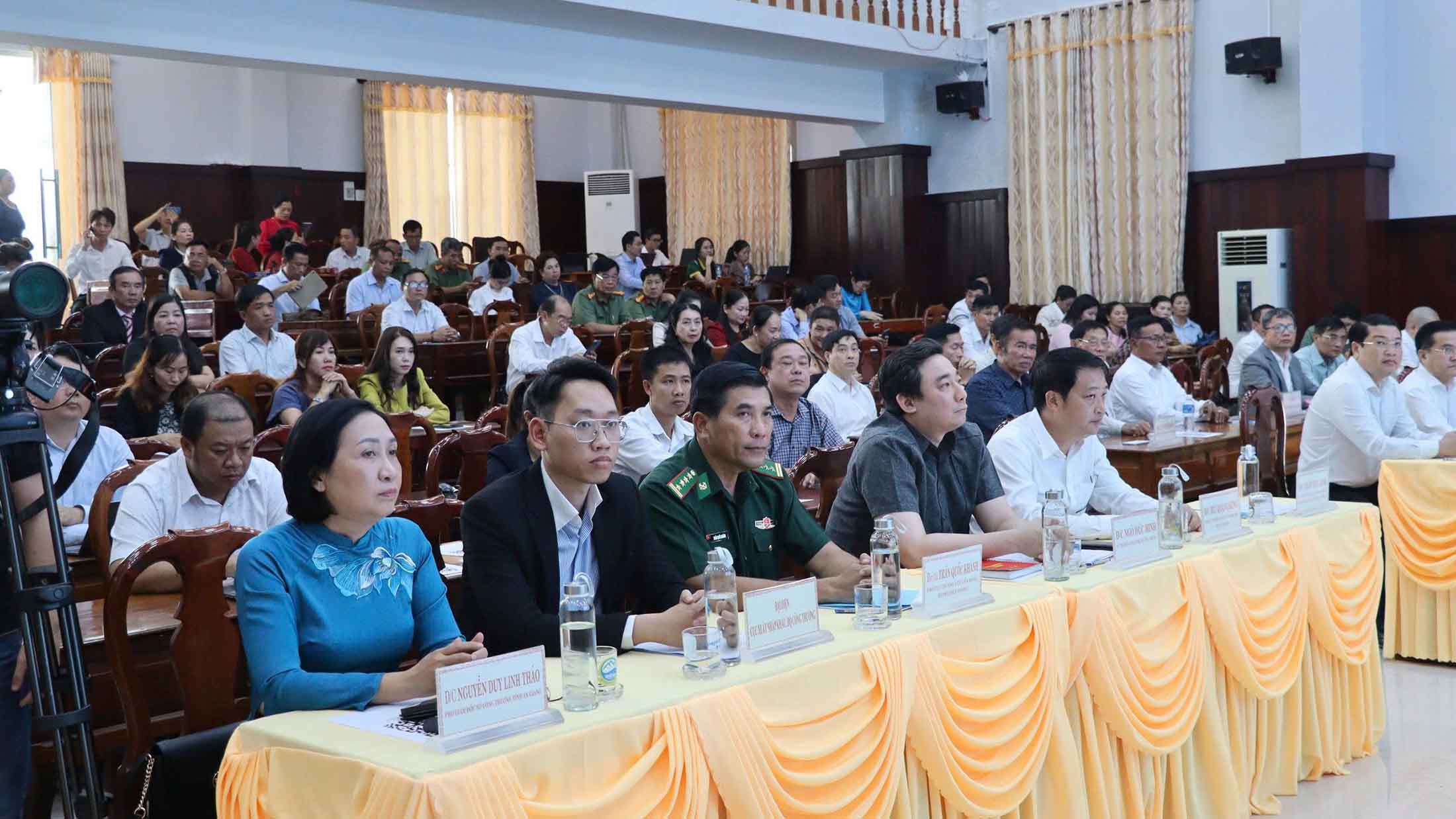
In his welcoming remarks, Le Trung Ho, Member of the Provincial Party Committee and Vice Chairman of the An Giang Provincial People’s Committee, emphasized the conference’s great significance as a forum for leaders of central ministries, local authorities, and the business community to exchange and share information; shape future directions for border trade infrastructure development; and promote economic cooperation, especially expanding Vietnam–Cambodia border trade regionally and internationally.

Mr. Le Trung Ho noted that An Giang enjoys dual advantages: it is both a leading center for agriculture and freshwater fisheries, and a marine-economy province with over 200 km of coastline, a seaport system, and internationally oriented trade–service–tourism cities, forming an integrated, multimodal economic corridor directly connected with Cambodia.
In An Giang, border trade remains a bright spot and a key driver supporting production and business. During 2021–2025, total import–export turnover through An Giang–Cambodia land border gates grew by an average of 12.7% per year; exports from An Giang to Cambodia averaged over USD 500 million annually.
Conversely, imports from Cambodia through An Giang exceeded USD 600 million per year, with complementary two-way commodity structures including raw materials, agricultural inputs, aquatic products, rice, consumer goods, fertilizers, and others.
Currently, An Giang’s border area has 17 border markets with more than 1,700 regular vendors operating stably; additionally, three Bach Hoa Xanh convenience stores are operating in Khanh Binh and Nhon Hoi communes.
The province has also stepped up investment in warehousing systems at border gates. Within functional zones of the An Giang Border-Gate Economic Zone, eight enterprises operate cargo consolidation, inspection, and supervision sites for import–export goods.
“In recent years, the governments of the two countries have paid special attention to the development of border trade. For An Giang, trade cooperation with Cambodia is not only of economic significance but also contributes to strengthening border security and enhancing the traditional friendship and solidarity between the peoples of the two countries. With our potential and strengths, along with strong political will and high determination and aspiration, we are ready for a new phase of cooperation that is deeper, broader, and more successful.
An Giang Province, with the support of the Ministry of Industry and Trade, commits to always accompanying enterprises and creating the most favorable conditions for them to invest and develop with confidence,” Vice Chairman of the Provincial People’s Committee Le Trung Ho affirmed.
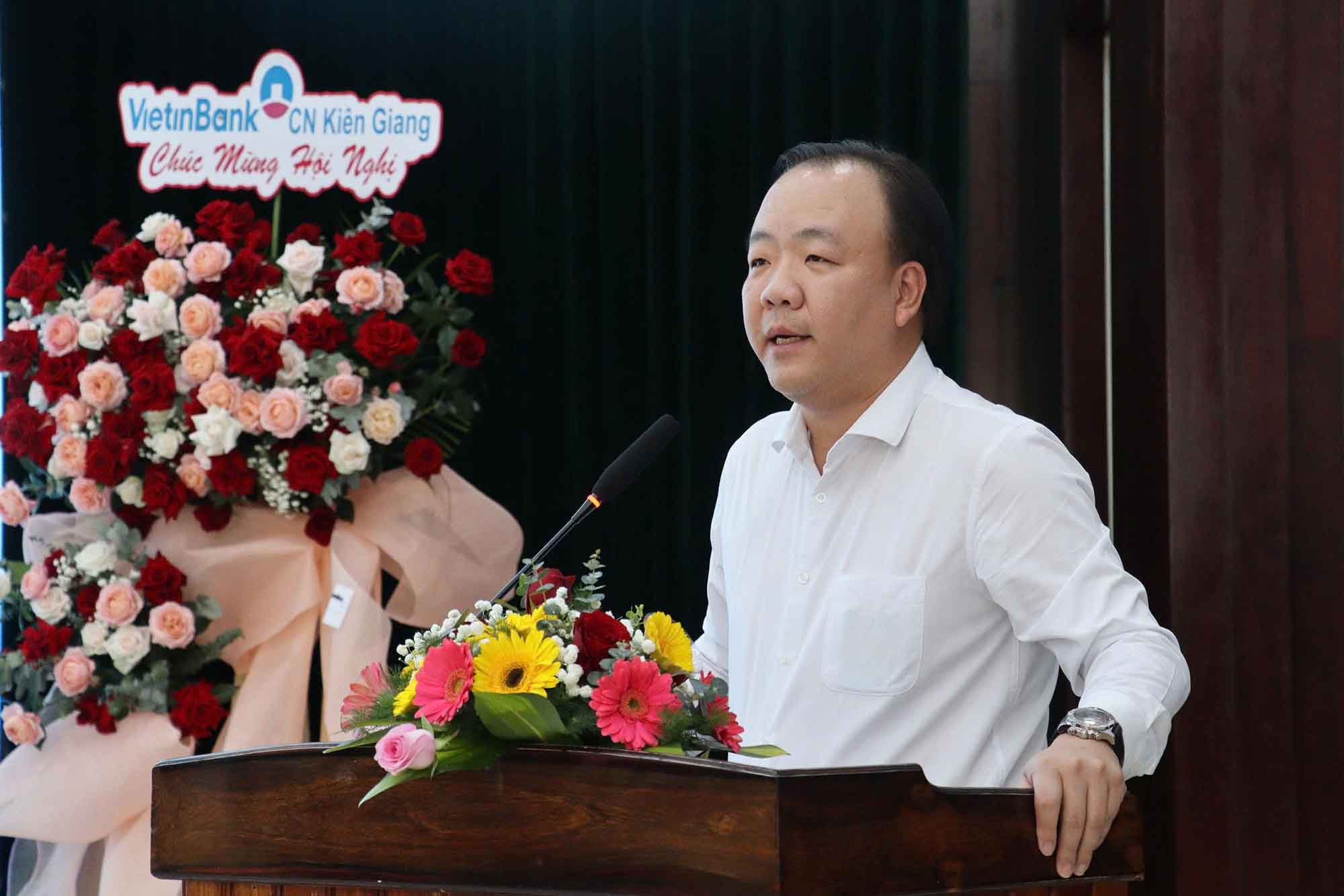
According to Tran Huu Linh, Director General of the Domestic Market Management and Development Department under the Ministry of Industry and Trade, Vietnam currently has 218 border markets; along the Vietnam–Cambodia border alone there are 85 markets, accounting for 39%, with more than 70% of these concentrated in Tay Ninh, Long An, Dong Thap, and An Giang.
Nationwide, there are 25 commercial centers and supermarkets; along the Vietnam–Cambodia border there are 8 supermarkets, no commercial centers—accounting for 67%—and 1 logistics center. In the first nine months of 2025, import–export turnover through Vietnam–Cambodia land border gates reached USD 5.9 billion, up 15.5% compared with the same period in 2024.
Tran Huu Linh noted that never before have ministries and sectors—especially the Ministry of Industry and Trade—paid as much attention to border trade, particularly between Vietnam and Cambodia, as they do at present. Over the past six months, units of the Ministry of Industry and Trade and provinces bordering Cambodia—from Tay Ninh and Dong Thap to An Giang—have continuously shown interest and provided direction in overall trade development as well as border trade in particular. Notably, earlier today the National Assembly of Vietnam voted to pass the E-commerce Law. This is Vietnam’s first e-commerce law, following nearly 25 years of e-commerce operations in the country.
He assessed that the E-commerce Law will bring fundamental changes and help e-commerce develop more sustainably, as it sets out regulations to protect consumers and, in particular, cross-border e-commerce activities. The Ministry of Industry and Trade is currently developing policies, with many new policies to be proposed, revised, and drafted. The Ministry has registered—and the Government has agreed—to begin amending the Commercial Law next year, after more than 20 years. In this process, commercial infrastructure, especially border trade infrastructure, is a very important component.
At the conference, ministries and agencies presented eight papers on: the status of border trade infrastructure development between Vietnam and neighboring countries; orientations for Vietnam–Cambodia border trade development; solutions to facilitate customs clearance through Vietnam–Cambodia border gates; promoting trade promotion by southern provinces to the Cambodian market; improving policy mechanisms to facilitate Vietnam–Cambodia border trade activities; application of e-commerce in business operations; proposed solutions to support exports of Vietnamese consumer goods to Cambodia; and logistics infrastructure and services as a driving force for Vietnam–Cambodia border trade development.
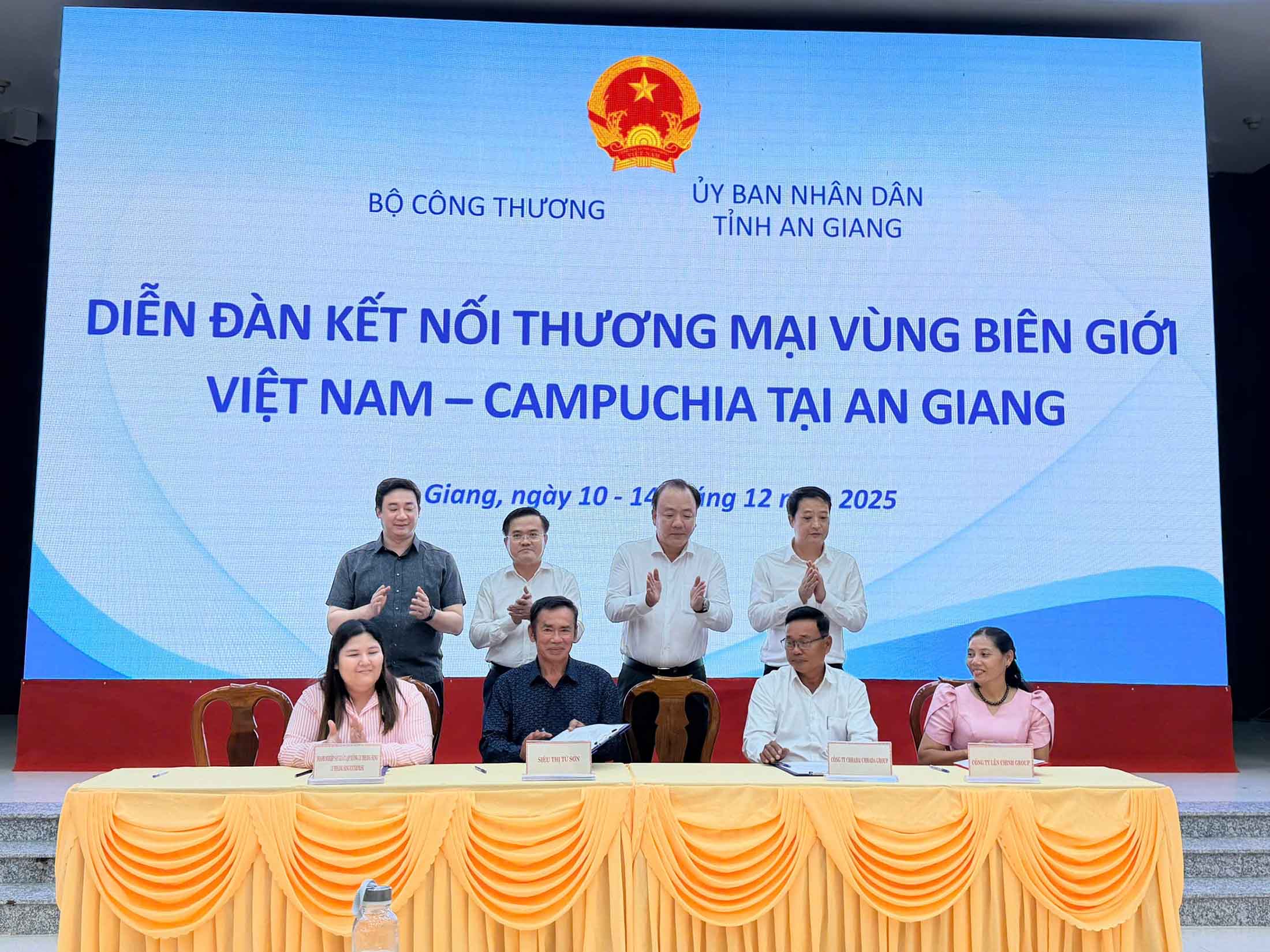
On this occasion, Vietnamese and Cambodian enterprises signed cooperation memoranda covering areas such as exchange and trading of consumer goods and general merchandise; logistics transport linkages; tourism product promotion; and the exchange and organization of tourist delegations between the two sides.
Reported by Nhu Ngoc
Translated by Kim Thuan