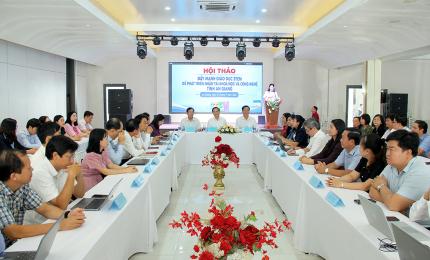
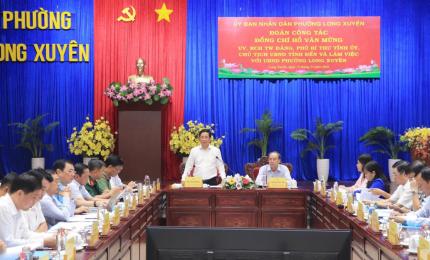
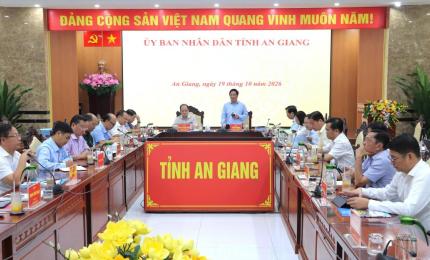
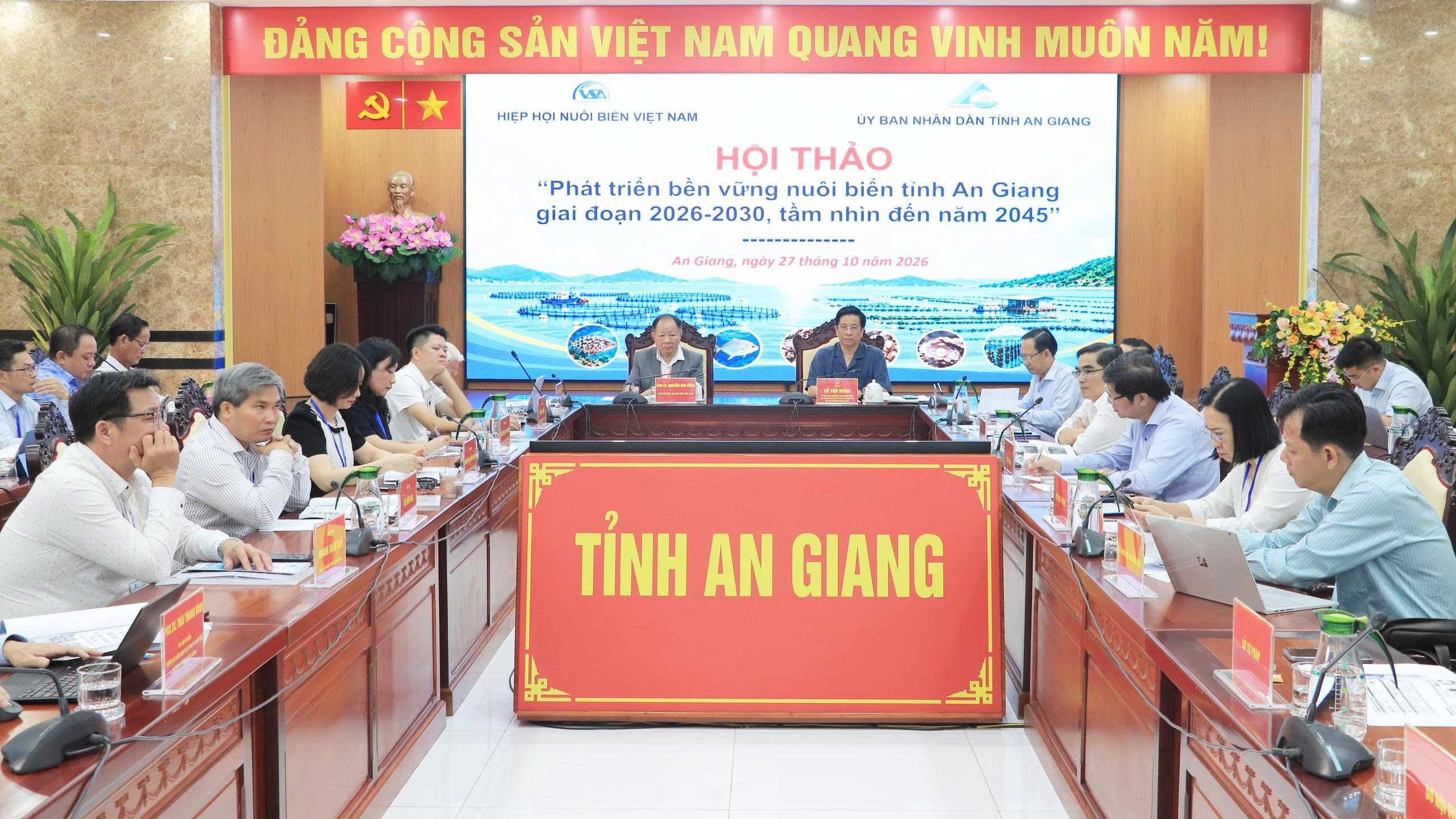
(AG Provincial E-Portal) - On October 27, the An Giang provincial People's Committee held a conference themed “Sustainable development of marine aquaculture in An Giang province for the 2026-2030 period, with a vision to 2045”.
The conference was chaired by Ho Van Mung, member of the Party Central Committee, deputy secretary of the provincial Party Committee and chairman of the provincial People's Committee.
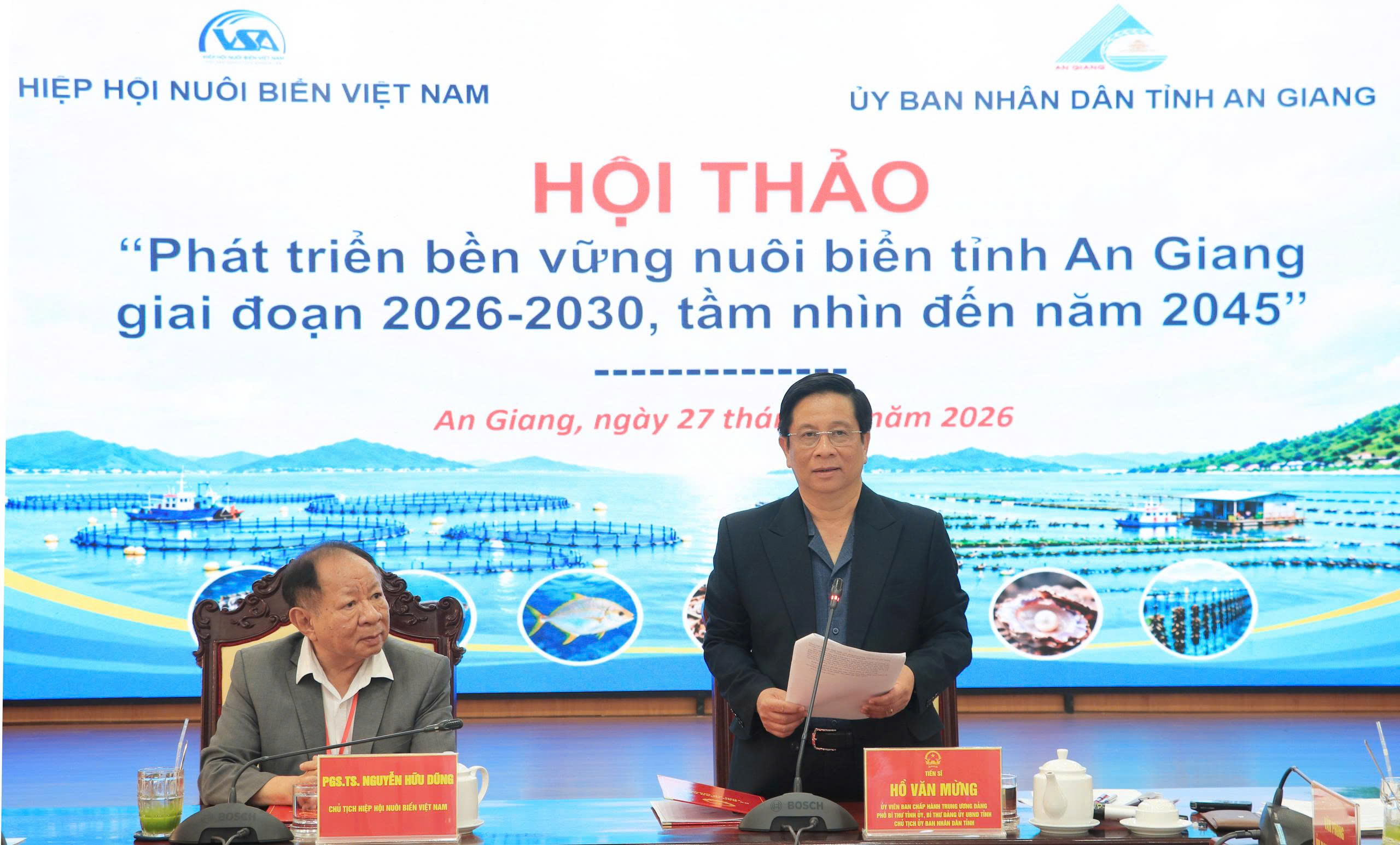
Speaking at the conference, Chairman of the provincial People's Committee Ho Van Mung said that following the merger, An Giang is the largest province in the Mekong Delta, with 3 special zones, a coastline of more than 200 km and a sea area of more than 63,000 km², along with advantages in transport connectivity with Ho Chi Minh City and other localities in the region. The province aims to become a strong national marine economic center, but the important thing is to mobilize and make effective use of existing resources.
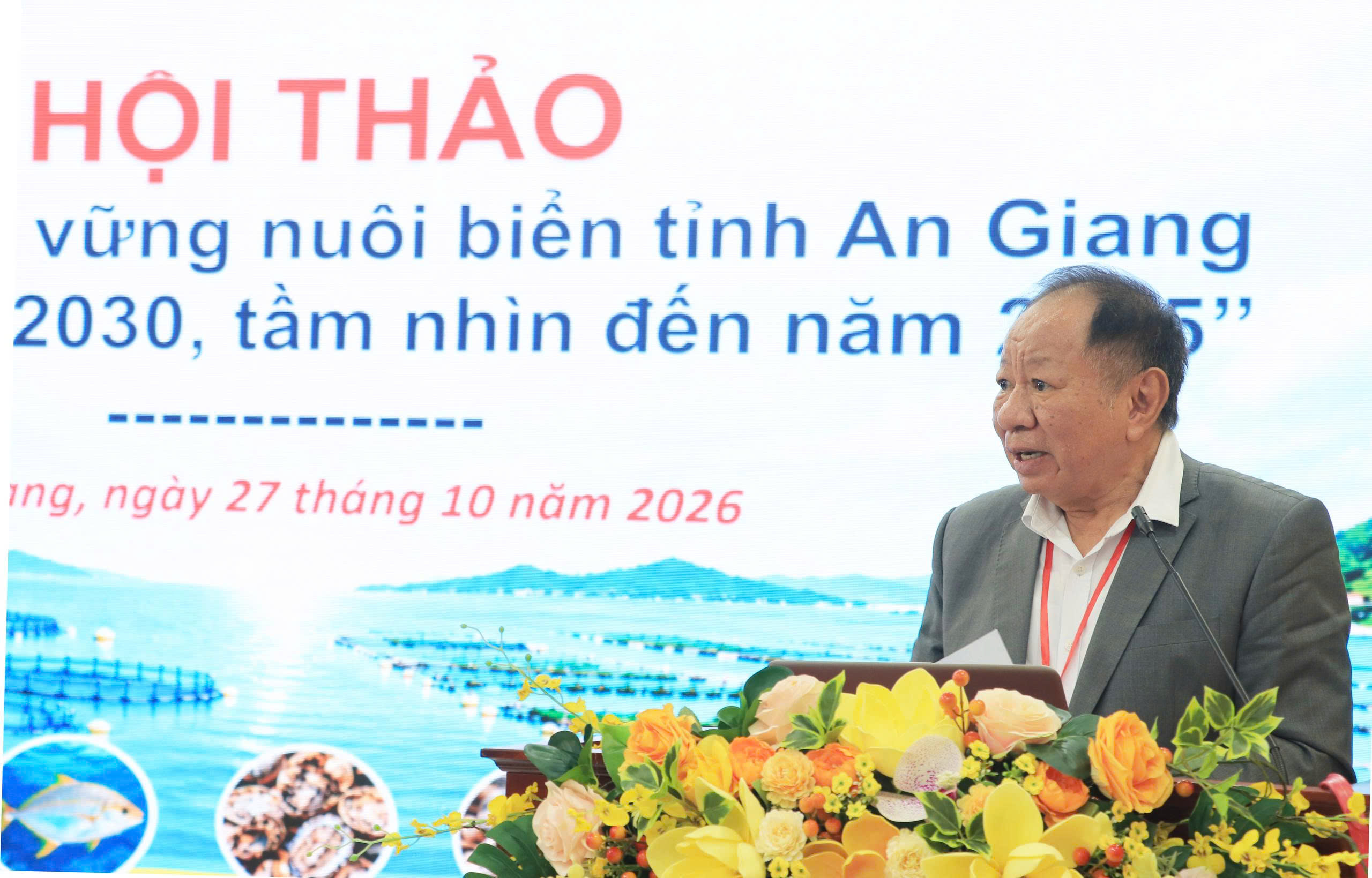
At the conference, scientists and experts proposed many solutions to develop marine aquaculture along industrial, modern and sustainable lines. Among them, Assoc. Prof. Dr. Nguyen Huu Dung, chairman of the Vietnam Mariculture Association, proposed developing modern marine farming villages on the basis of large companies investing in production infrastructure and providing professional input and output services, so as to attract businesses, cooperatives and fishermen to lease the infrastructure for marine farming production. A modern marine farming village has modern infrastructure and advanced marine farming technology, applies common international standards, produces products meeting the same standards, and has registered and classified production facilities, ensuring quality while reducing costs, achieving large output, building a major brand and reducing marine environmental pollution.
The province needs to develop regulations and standards on industrial marine aquaculture, environmental management of marine farming areas, and techno-economic norms for industrial marine farming facilities.
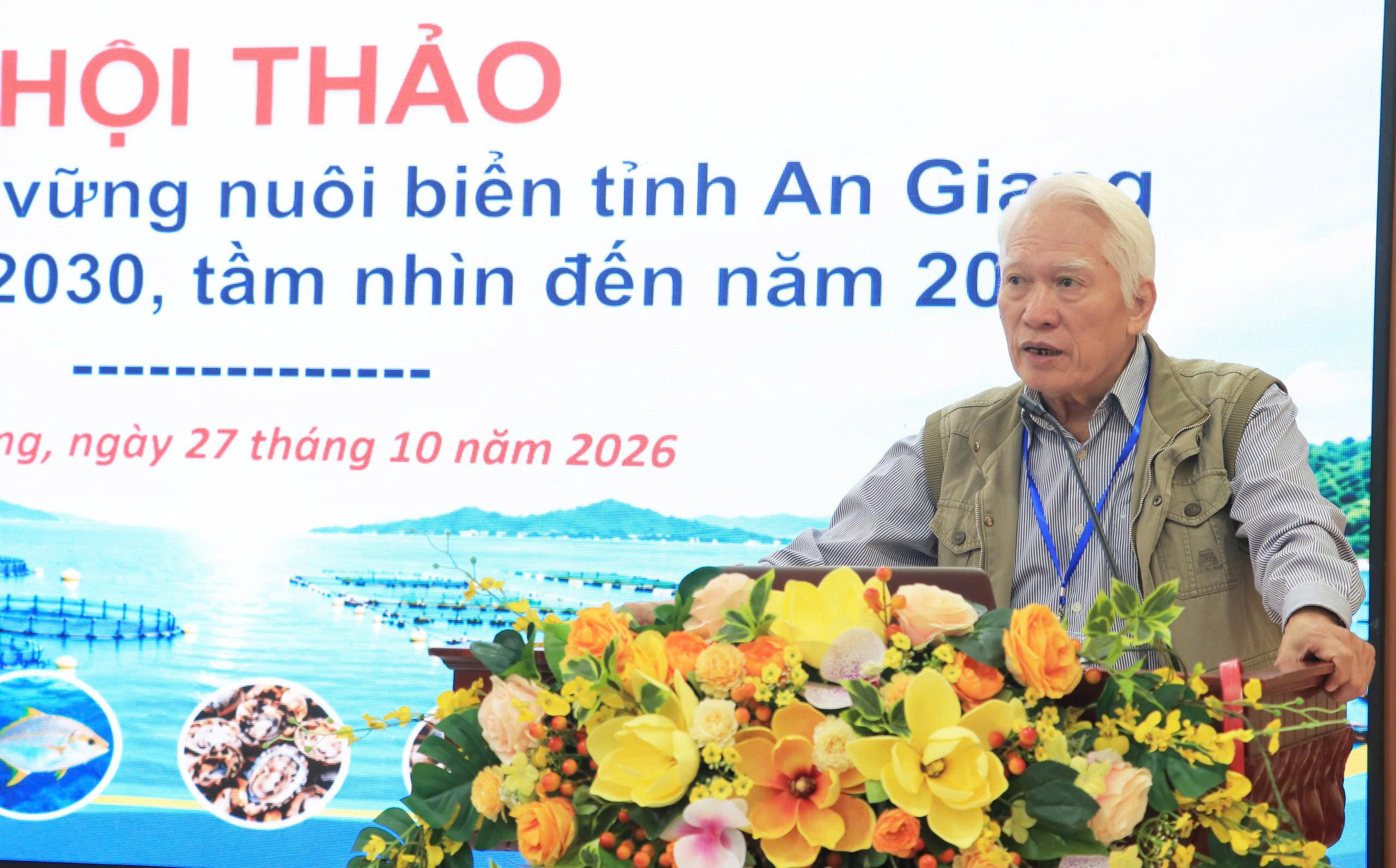
Assoc. Prof. Dr. Nguyen Chu Hoi, former deputy director general of the Vietnam Administration of Seas and Islands, proposed solutions for developing marine aquaculture in the new context. Positioning marine aquaculture in line with its inherent potential and advantages, and restructuring An Giang's fisheries sector toward prioritizing high-tech marine farming combined with creating dual benefits, is the right direction. Marine farming areas and clusters must conform to the national marine spatial planning and the province's marine functional zoning plan in order to avoid conflicts of interest. Marine aquaculture should be linked with recreational fishing, with tourism, with people's livelihoods and with security and national defense. The province needs specific mechanisms and policies to support marine farming legal entities in line with the orientation of Resolution 20.
Assoc. Prof. Dr. Vo Van Nha of the Vietnam Academy of Fisheries Sciences suggested developing species with potential such as cobia, barramundi, golden pompano, grouper, lobster, sea cucumber, seaweed and valuable mollusks. At the same time, it is necessary to step up the application of technology in seed production and commercial farming, and to select farmed species suited to the conditions of each area, contributing to product diversification, higher economic value and sustainable livelihoods for coastal communities.
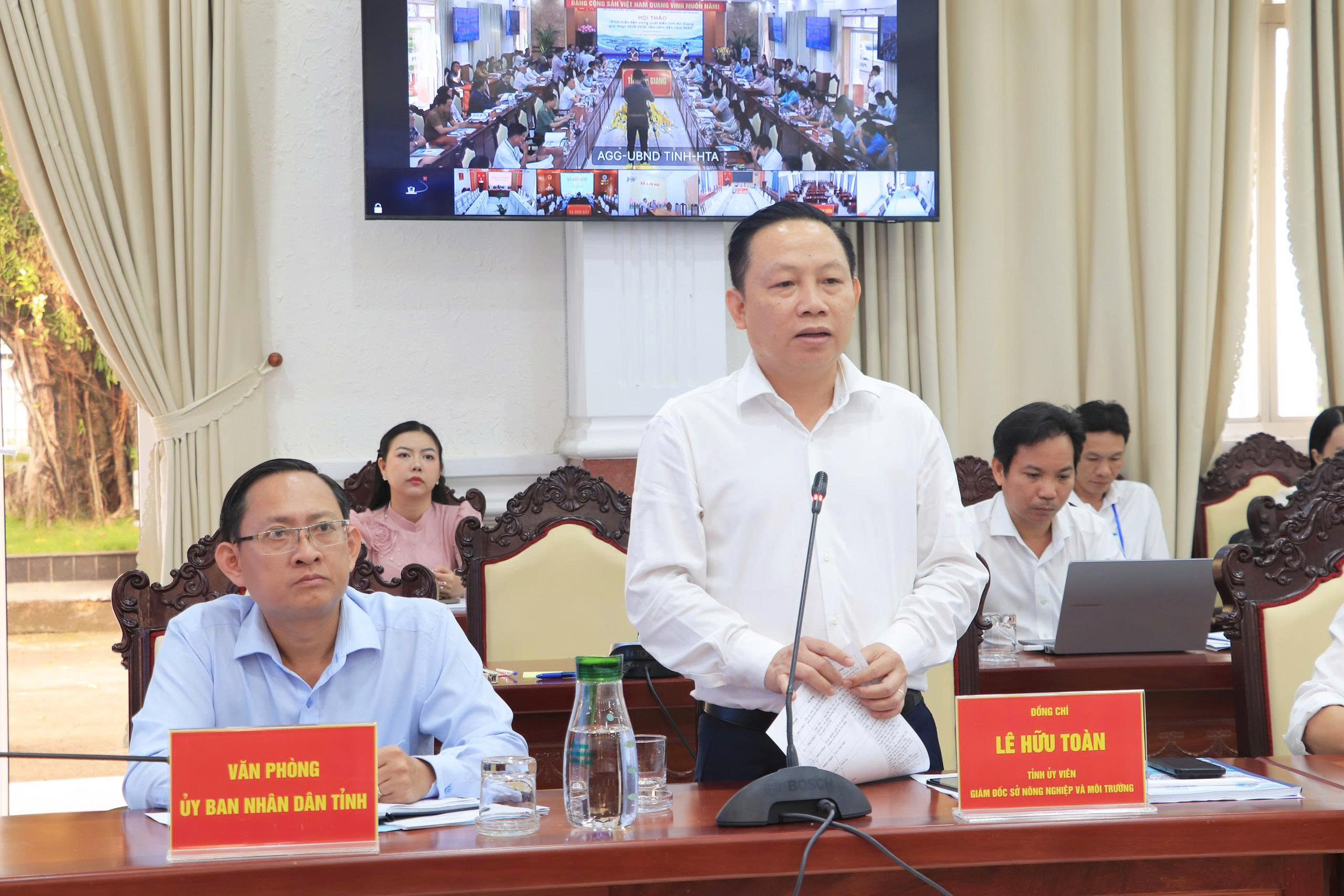
Delegates also discussed the application of science and technology, digital transformation, financial solutions and the processing of seafood for export; the development of high-tech HDPE farming cages, low-emission seaweed farming, consumption chain linkages, and the combination of marine farming with experiential tourism.
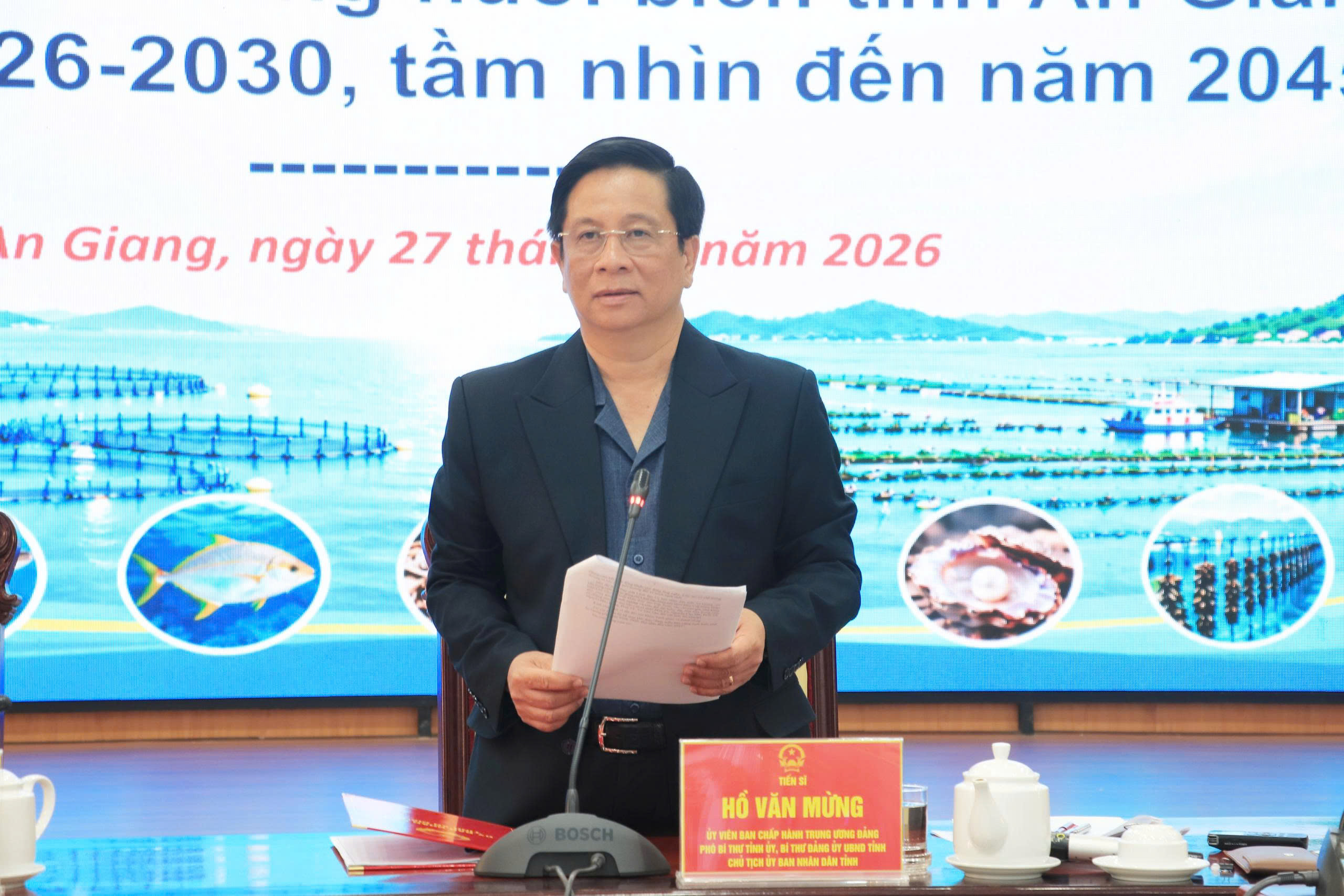
In his concluding remarks, Chairman of the provincial People's Committee Ho Van Mung emphasized that the in-depth papers and discussions at the conference had produced a high degree of consensus on many strategic perceptions and orientations. These include fully recognizing the new context and An Giang's outstanding room for developing marine aquaculture; acknowledging bottlenecks and risks; and agreeing on the principle of sustainable development. Marine aquaculture must not pursue increases in area or output alone, and under no circumstances should the ecological environment be traded for short-term benefits. The highest measures are added value, environmental carrying capacity, structural safety, and the harmonious resolution of the “fishermen – fisheries – fishing grounds” equation so as to ensure long-term livelihoods, promote responsible fishing and definitively remove the IUU yellow card.
Accordingly, the province will review marine spatial planning and multi-purpose marine governance; step up the application of science and technology, digital transformation and management based on environmental carrying capacity; swiftly resolve the issues of seed stock, feed conversion and the development of species with economic value; organize production along value chains with the market as the guiding orientation; and improve credit policies, attract investment and train human resources, and so on.
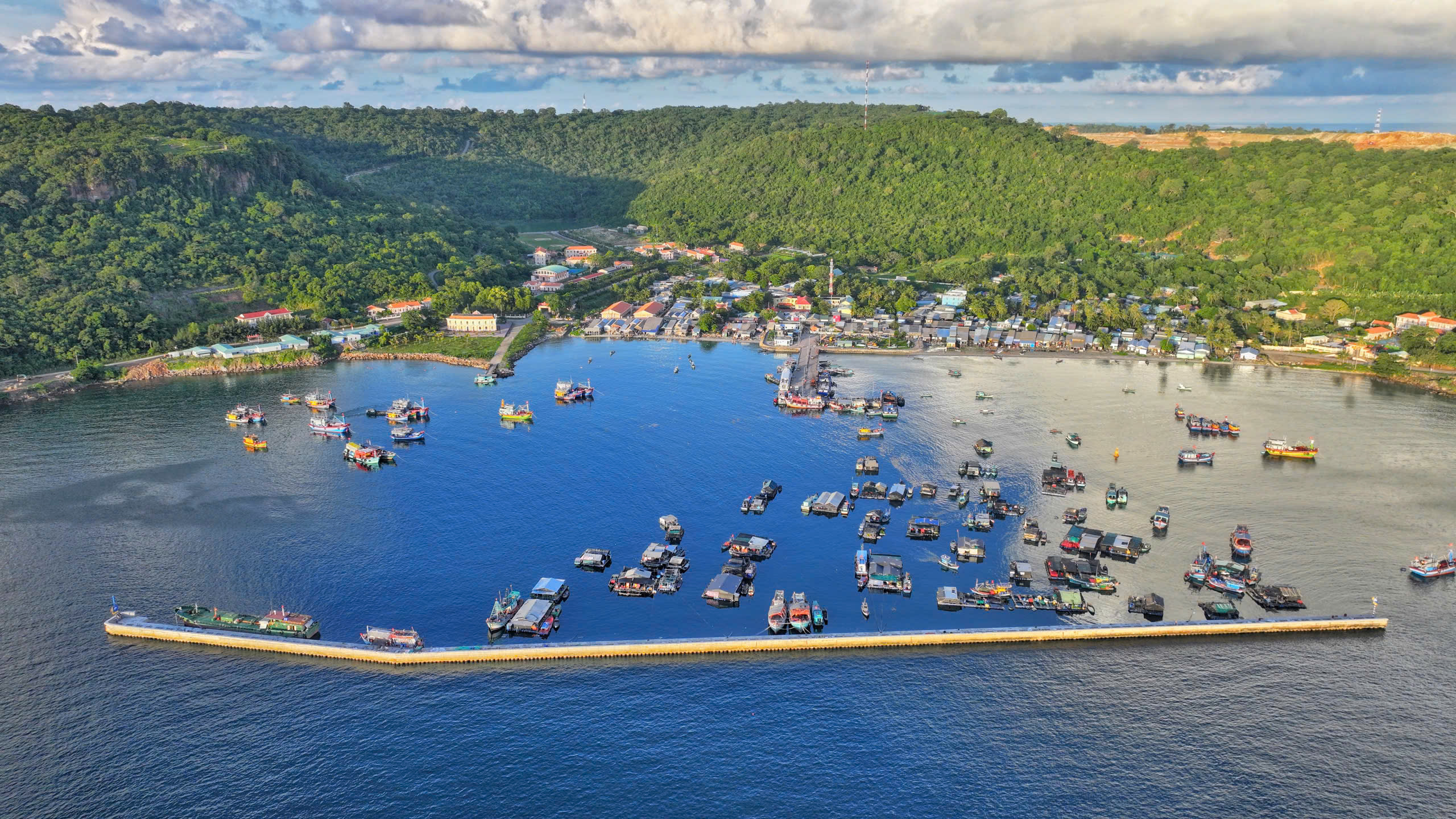
Chairman of the provincial People's Committee Ho Van Mung assigned the Department of Agriculture and Environment to take the lead in building a master scheme on sustainable marine economic development and a scheme on marine functional zoning; and to coordinate with the Institute of Oceanography in building a marine database, classifying species and studying a modern marine village model combined with ecotourism and cultural experiences.
Departments and agencies are to study technical regulations on converting old fishing vessels no longer used for fishing into experiential tourism craft, helping to create new livelihoods for fishermen, develop distinctive tourism products and curb IUU fishing violations.
The Department of Science and Technology is to coordinate with the Department of Agriculture and Environment and the Vietnam Academy of Science and Technology in researching the development of marine medicinal materials and linking research results with processing businesses to commercialize products; and at the same time to study seed production technology for marine farming, helping the province secure its own source of high-quality seed stock. Communes, wards and special zones are to coordinate in implementing zoning plans and suitable livelihood conversion models for fishermen.
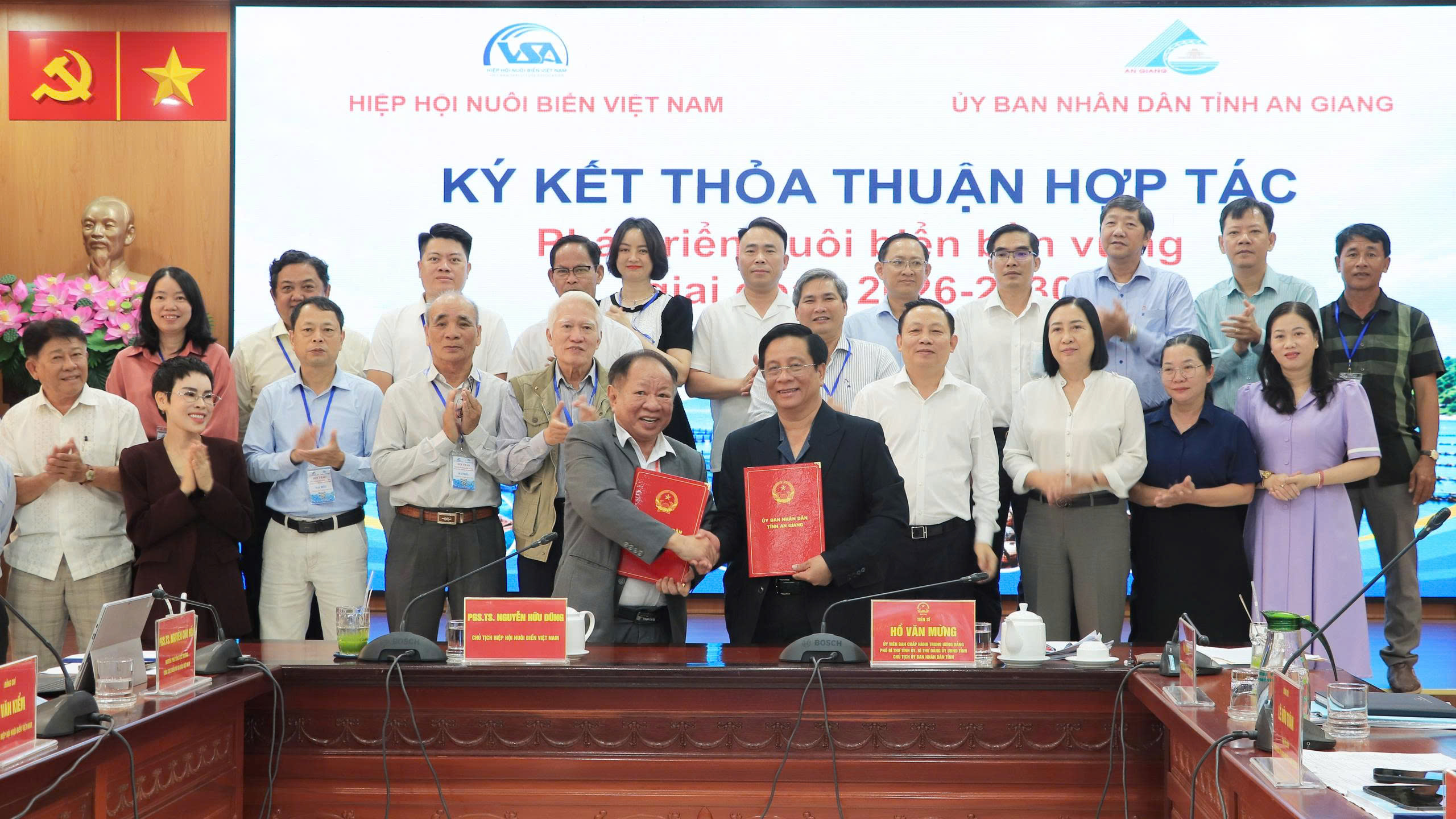
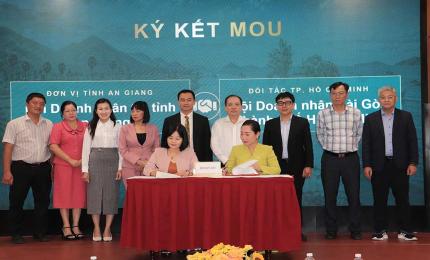
On this occasion, the An Giang provincial People's Committee and the Vietnam Mariculture Association signed a strategic cooperation agreement for the 2026-2030 period, with a vision to 2045, aimed at developing high-tech marine aquaculture, ecosystem-based multi-species farming and a blue marine economy; and forming concentrated, modern production areas linked with logistics infrastructure, support services, processing, trade and export, contributing to raising the incomes of coastal residents and ensuring national defense, security and sovereignty over seas and islands.
Reporter Nhu Ngoc
Translated by Kim Thuan